The kettle goes on, the toaster pops, and the lights in the kitchen dip for half a second. Most people learn to live with that little flicker. It becomes part of the house, like a sticking door. The truth is closer to the opposite. That flicker is your electrical installation telling you something, and the fuse board behind the cupboard door is usually where the conversation needs to start. A consumer unit that struggles with everyday demand, or one with no modern protection at all, is not a quirk of an older home. It is a safety issue that quietly gets worse with every appliance you add.
The Warning Signs
A fuse board rarely fails without notice. It tends to warn you first, and the signs are easy to recognise once you know what you are looking at.
- Lights flicker or dim: If lights drop when a kettle, oven, or shower kicks in, the installation is being pushed harder than it should be. Occasional, momentary dimming on a high-load appliance is one thing; regular flickering across the house is a sign worth acting on.
- Breakers or fuses keep tripping: A breaker that trips once in a while is doing its job. A breaker that trips repeatedly, or a fuse wire that keeps blowing, points to an overloaded or faulty circuit that the current board is not coping with.
- A wooden or metal board with rewireable fuses: Older boards mounted on a wooden backing, or fitted with ceramic rewireable fuses, are well behind current standards. They offer little protection against shocks and electrical fires and were never designed for the loads a modern home places on them.
- No RCD protection: If your board has no RCD (the larger switch with a test button), there is no fast-acting device cutting the supply if someone touches a live part or a fault develops to earth. This is one of the single biggest gaps in older installations.
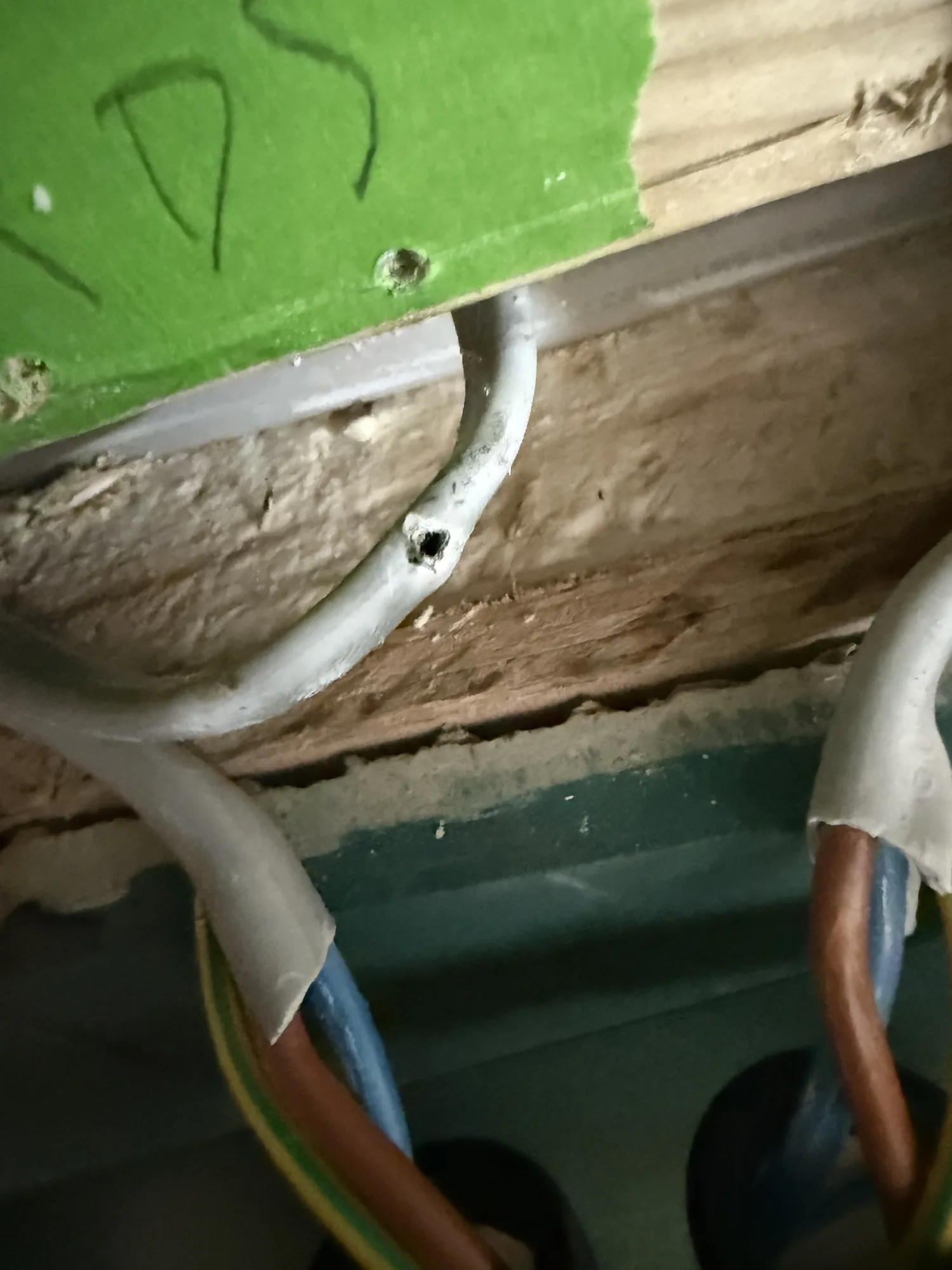
- Buzzing, scorching, or a warm board: A faint hum, a burning smell, discoloured or scorched marks around the board, or a unit that feels warm to the touch are serious signs. Stop using the affected circuits and call an electrician.
- Burnt or discoloured sockets: Browning around sockets and switches often traces back to loose connections or overloaded circuits, and the board is usually part of the picture.
What an Old Board Cannot Do
It helps to understand what an ageing board is missing rather than just that it looks dated. The difference is not cosmetic. It is the difference between a fault being contained in milliseconds and a fault becoming a fire or a shock.
- A rewireable fuse is a single piece of wire that melts when the current gets too high. It works, slowly, and then has to be physically rewired before the circuit can be used again. It offers no protection at all against an earth fault or someone receiving a shock.
- An MCB (Miniature Circuit Breaker) does the same overload job far more reliably and reacts faster, then simply resets once the fault is cleared. No fiddling with fuse wire in a dark cupboard.
- An RCD (Residual Current Device) watches for the small imbalance that happens when current leaks to earth, through damaged cable or through a person, and cuts the supply within a fraction of a second. An old board with no RCD has no equivalent of this. It is the protection that matters most for preventing serious electric shock.
An older installation that has none of this is not "fine because it has always worked". It has simply never been tested by the fault it was meant to protect against.
Worried About Your Fuse Board?
Furlong BAU Limited is a NICEIC registered, UKAS approved contractor covering Swansea and the Gower. Call 07814 888747 for a free, no-obligation quote on a fuse board upgrade.
Get a Free QuoteWhat a Modern Consumer Unit Changes
Upgrading to a modern consumer unit is one of the most worthwhile safety improvements you can make to a home, and the change is more than a tidier board behind the door.
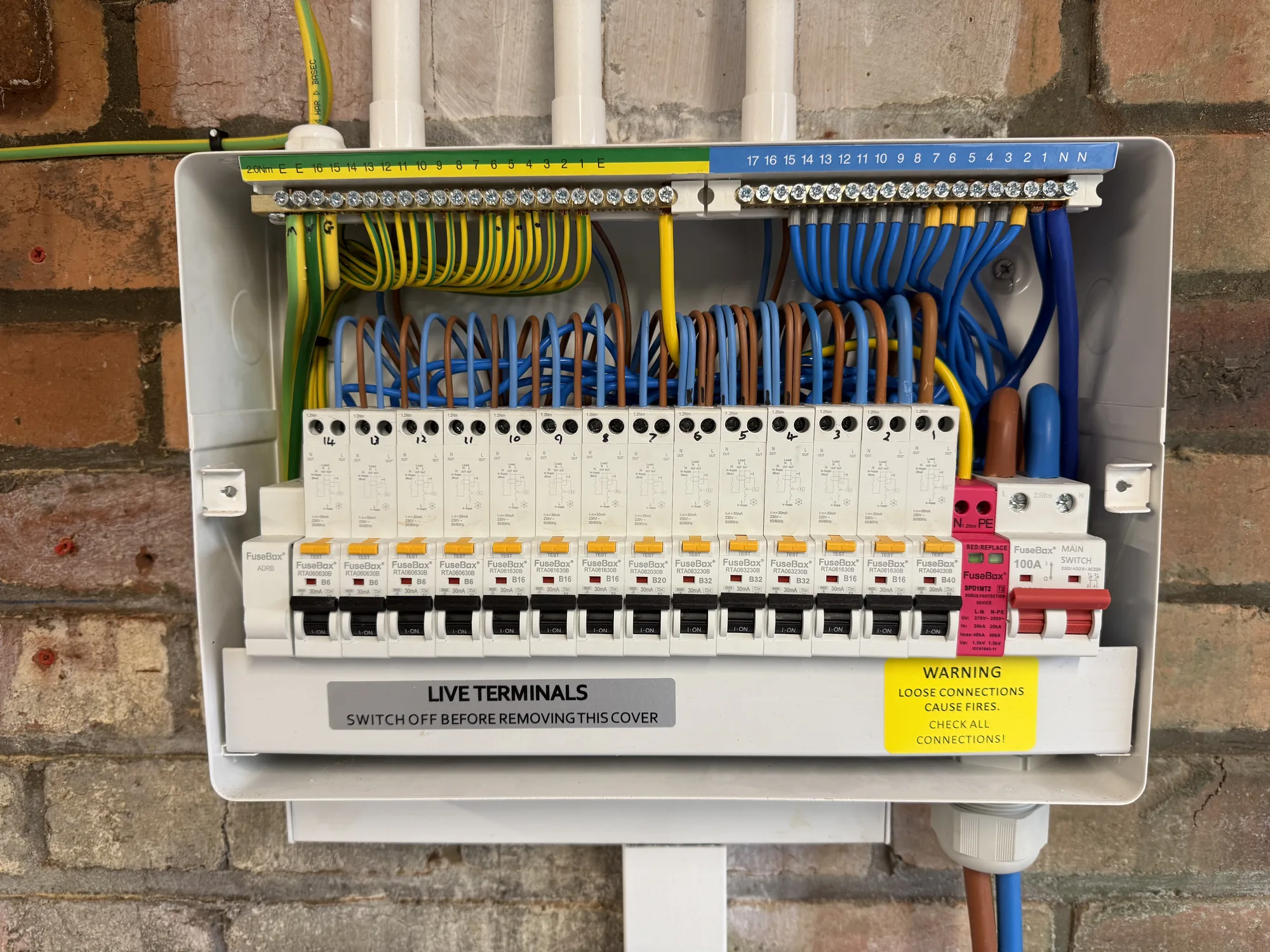
- Every circuit gets MCB protection: Lighting, sockets, the cooker, the shower, each on its own breaker that trips on overload and resets cleanly once the fault is fixed.
- RCD protection across the installation: Modern units provide fast-acting residual current protection, so an earth fault or a shock situation disconnects the supply almost instantly rather than continuing to flow.
- Circuits clearly labelled: A properly upgraded board has every circuit identified, so isolating one part of the house no longer means switching off the whole thing and guessing.
- Compliant to current standards: A new board is installed and tested to the current amendment of the BS 7671 wiring regulations, the 18th Edition, and certified accordingly.
- Headroom for modern living: A modern unit is built for the loads a current household actually places on it, from electric showers to an EV charger, rather than the loads a home had decades ago.
It is also worth knowing that some home insurers expect an up-to-date board with proper protection in place, and an outdated installation can become a question at renewal or at the point of a claim.
The Upgrade Process
A consumer unit upgrade is a planned, methodical job, not a quick swap. Here is what to expect when we carry one out.
- Survey of the existing installation: We check the current board, the wiring, and the condition of the circuits feeding it. This is where any underlying issues that need addressing alongside the board are identified, so there are no surprises on the day.
- Isolating the supply: The power is fully turned off while the work is carried out, so it is worth planning for a period without electricity, usually a few hours.
- Removing the old board and fitting the new unit: The old board comes out, the new consumer unit goes in, and any wiring that needs correcting or improving is dealt with so everything is properly terminated and labelled.
- Full testing and certification: Every circuit the board feeds is tested to confirm it is working correctly and properly protected, and you receive the relevant certification confirming the installation complies with BS 7671.
A typical upgrade takes between four and eight hours depending on the size and condition of the system, and we will always tell you up front what to expect for your property. If broader issues come to light, an EICR can be the sensible next step before deciding how far the work should go, and a full rewire is occasionally the better long-term answer for a very old installation.
Cost Guide
Pricing depends on the size of the property, the condition of the existing wiring, and whether any remedial work is needed alongside the board itself.
- Consumer unit upgrade: £600 – £700 as a guide for a typical domestic board, including supply, installation, and testing, certified to BS 7671.
- Additional remedial work: If the survey or testing reveals faults on existing circuits, earthing, or bonding, that work is quoted separately and explained clearly before anything is agreed.
- Free, no-obligation quotes: We assess the job and come back with a clear, transparent price. There are no hidden extras and no pressure.
We have never been the kind of firm that races to the bottom on price. The aim is the best job we can do within your circumstances and budget, explained in plain terms and left tidy.
Why Use a NICEIC Registered Electrician
Replacing a consumer unit is not a job for an unqualified person. It involves working on the heart of the installation, and the regulations exist for a reason.
- It must be done competently and certified: Consumer unit replacement is notifiable work that has to be carried out by a competent person and properly certified. Non-compliant work can invalidate insurance and leave you exposed.
- NICEIC registered, UKAS approved: Furlong BAU Limited is a NICEIC registered contractor and a UKAS accredited approved contractor, so the work meets the latest BS 7671 wiring regulations and is documented correctly.
- Proper test equipment and method: A correct upgrade involves testing every circuit with calibrated equipment, not just fitting a board and switching it back on. That is what confirms the installation is genuinely safe.
- Owner-led work in Swansea: The business is run by Louis Furlong and covers Swansea and the Gower. You can verify our NICEIC registration before any work starts.
If your board is showing any of the signs above, it is worth a professional assessment rather than waiting for it to force the issue. Call us on 07814 888747 or email furlongbau@gmail.com.
Frequently Asked Questions
Watch for flickering or dimming lights, breakers or fuses that keep tripping, buzzing or a burning smell, and a warm or discoloured board. An old board on a wooden backing, with rewireable fuses, or with no RCD almost certainly needs upgrading. If you have recently added high-power appliances or are unsure, a professional assessment will confirm it.
A fuse is a single-use piece of wire that melts when the current is too high and then has to be rewired before the circuit can be used again. An MCB is a more reliable, reusable breaker that switches the circuit off automatically on an overload or fault and can simply be reset once the fault is cleared.
An RCD (Residual Current Device) detects the small imbalance between live and neutral that happens when current leaks to earth, through damaged cable or through a person, and cuts the supply within milliseconds. It is the protection that matters most for preventing serious electric shock, and older boards with no RCD have no equivalent.
Typically four to eight hours depending on the size and condition of the installation. The power is off for that period, so it is worth planning around a few hours without electricity. The time includes a full test of every circuit the board feeds before we leave.
As a guide, a typical domestic consumer unit upgrade is in the region of £600 – £700, including supply, installation, and testing, certified to BS 7671. If the survey or testing finds faults that need remedial work, that is quoted separately and explained clearly before anything is agreed. We provide free, no-obligation quotes.
No. Consumer unit replacement is notifiable work that must be carried out by a competent, registered electrician because of the risks involved and the testing and certification required. Furlong BAU Limited is NICEIC registered and UKAS approved, so the work is compliant with BS 7671 and properly documented.